Darke Reviews | Halloween (1978)

So last night I had to buy the Halloween, no not the Rob Zombie one, the real one. The original one. These reviews are based on films that I own or have access to and I did not have this one. A sin in its own right for those that really enjoy horror. I do have the option through friends to do an old vs. new on this with Halloween vs. Halloween. I just can’t though. Much like how Doug Walker feels about the haunting. I feel about the Halloween series. The original wins. The Rob Zombie version sucks. I will probably reference this as I talk through the review of the original.

While Texas Chainsaw Massacre beats this by 4 years in release date, Halloween is probably the film most singularly responsible for the Teen Slasher style of horror that dominated the late 70’s and almost all of the 80s. This has everything to do with what the film does successfully that so many many others failed to understand (Zombie).

Let us start with discussing the screenplay that was written by Debra Hill and John Carpenter. Hill, who sadly most people aren’t aware of, was a frequent collaborator with Carpenter on much of his early works. She was a writer on this film, The Fog (excellent),  and Halloween 2. She was also a well known and popular female producer in Hollywood until her death in 2005. Carpenter himself, like Wes Craven, is one of the names most associated with Horror films to this day. It is nigh impossible to discuss the great horror films of all time without either of their names coming up.

Carpenter himself, was of course, also the director of the film. The man has an unusually strong grasp of atmosphere, sound, and darkness.  These elements, along with soundtracks usually designed by him, come through in so many of his other films. He was also the director of Dark Star , the indie film by the guys who wrote Alien. This would be his first wide release foray into horror.

I am going to point out something that is often overlooked, the movie has a budget to ratio of 144:1.  The film was made with a budget of $325,000 and made $47,000,000. By the numbers this makes it more successful than Clerks. It is also perfectly in line with the modern era of horror in which budgets are rather small with relatively successful box offices. Sadly, even the modern era still typically have budgets in the millions and only made 3 to 4 times the budget. Paranormal Activity and Blair Witch being key exceptions to those rules.

The story here involves as escaped mental patient returning to his hometown of Haddonfield, Illinois (Hill’s hometown is Haddonfield NJ); a stereotypical, near Rockwellian, midwestern town (it actually reminds me of my hometown a bit). His single minded focus is a young high school girl named Laurie Strode.  The patients doctor, Sam Loomis, rushes to Haddonfield to try to stop the patient from reaching his goal.

It is important to know, and this is what sets the movie apart from later reimagining garbage, is that Michael Myers as a character was never named as such. He simply was The Shape. He was a force of nature. He existed as a physical manifestation of evil. He didn’t need a backstory. He didn’t need a reason to be. He simply was. While later films in this particular arc would add  supernatural elements to his story and expand on it, the success here was none of it was needed. He scared people simply by BEING. This talks to Carpenters understanding of things as a director, the thing you cant see is more scary than the thing you can. What you don’t know scares you. Its why the ending of The Thing is so perfect and so iconic and why this film is the same. You never see The Shape fully until the end. You get glimpses. You get partials. Even the movie posters didn’t show a thing. This is brilliance and a brilliance we’ve lost as a film going society.

(ok technically you can put it together. He was called Michael as a child in the beginning and you are told its the Myers house shortly after during Strode’s introduction)

From an acting standpoint, so much rides on the shoulders of first time film actress, barely 20 at the release of the film, Jamie Lee Curtis. She was cast as much for her skill as her heritage, being the daughter of Pyscho’s famous shower scene victim Janet Leigh. Curtis would later be labeled the Scream Queen with future performances in The Fog, Prom Night, Terror Train, and of course Halloween II. She as much as anyone starts the tradition of the lone virginal female protagonist overcoming the antagonist of the film after going through a crucible of sorts and find their inner strength and power. Their own rage, their own will to survive.

The weight of veteran actor Donald Pleasence as Loomis adds to the emotion. He consistently through the movie is in a near fervored insanity as he futily attempts to warn people of the threat Myers presents.

From another technical standpoint the film uses its music perfectly. If I were to make a list of iconic themes this would be on it. Without the music or with different music it would lose something.


TL;DR?

This is a classic. So many slasher films that follow after are but pale imitations of this. It is a must see film for any horror aficionado. I find that it even holds up watching today.

Because of all that was done right in this, all that works, I truly truly hate Rob Zombies version. For everything this does right, his does wrong.

If there is a Halloween film to watch. Watch the one that started it all.
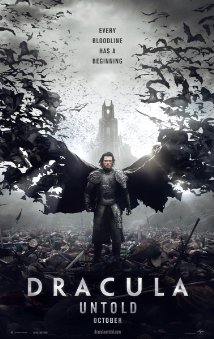
Darke Reviews | Dracula Untold (2014)

Amongst my nicknames is Vampire Princess. My license plate says VAMPRE, I have well over 100 books involving, about, or otherwise tied to vampires. So to say I am an aficionado of all things vampire is an understatement. I’ve been reading about them since I could read. I have a moral (amoral?) obligation to watch any vampire film that comes to the silver screen. This means I see it all, even Twilight and Vampire Academy. When I saw the trailer for Dracula Untold I had a feeling about this film, but knew I would be seeing it anyway.

First time film director Gary Shore must have impressed Hollywood with the career he made directing commercials before to get this job. He is working with a script by first time writers Burk Sharpless (seriously…that’s his name) and Matt Sazama. The trio of novices have crafted a different origin story for our famous voivode. Dracula actually has more remakes and interpretations than any other character ever and this time, they focus on the conflict between the people of Transylvania and the looming shadow of the Ottoman empire. I realize now as I write this, the overall plot is very similar to 300 with the vampire aspect thrown in. They do some interesting things with the principle characters and the entirety of Act III was rather enjoyable. The dialogue is often corny but the actors do their best to deliver it within the serious tone the movie tries to keep.

From an acting standpoint much rides on Luke Evans as Vlad. I actually like Evans. I’ve seen most of his filmography – Clash of the Titans, Three Musketeers, Immortals, The Raven, No One Lives, Fast & Furious 6, and of course most recently as Bard in the Hobbit films. He is an action star and though his range is fairly limited he does some pretty good things with that range. This time he does carry the film and has to go from loving father and husband, to monster, to protector, to monster again. He wears righteous rage so well in this movie and still shows that he is learning to chew scenery. Co-star Charles “Tywin Lannister” Dance, is a master of it. I couldn’t stop giggling or making Vampire The Masquerade/Game of Thrones comments under my breath watching him. Sarah Gadon as Vlad’s wife Mirena brings a smile to my face in nearly every scene. Just when I think she will fall victim to so many annoying tropes, I remain surprised. Dominic Cooper (Howard Stark in Captain America) must have been cast from his time playing Saddam Hussein in the Devil’s Double.  The casting call must have been “we need a white guy who can pass as middle eastern.” “Hey can we get this guy?”. I am not saying he is a bad actor by and stretch, but there’s some whitewashing going on here in the casting and that I cannot approve of on some moral grounds.

On a technical standpoint. Is the Bat scene from the trailers ridiculous? Oh by all the New Gods and Old and the Lord of Light YES. It doesn’t make it any less cool looking. The transformation to bat and the uncovering of his vampiric powers are well handled and honestly do look really cool.  They are used effectively, practically, and rather coolly through each fight sequence. The camera work is good. The CG is not god awful. The vampiric reaction to silver and sunlight is handled in a way I haven’t seen before and enjoy what I saw. Music by Ramin Djawadi didn’t help with the Game of Thrones links in my brain. The pacing is really well done and there’s little fat on this movie.

TL;DR?

Let me be absolutely clear. This is not a good movie. Historical inaccuracies, geographic inaccuracies, costuming inaccuracies, the premise, and story all  combined present a rather silly reinvention of the Dracula films.

At the same time, it is also absolutely enjoyable. I was laughing. I was engaged. I was entertained. I probably wasn’t supposed to giggle through the first few minutes of the final act, but that doesn’t take away the fact that I was. I was getting more and more angry the longer the film went on during act I and finally realized that I need to stop taking this seriously. I had to stop expecting that there would be *any* similarity to real history beyond Ottomans and Vlad being in it. Once I embraced what the movie was doing I truly began to enjoy it. I like what it adds to the Dracula Mythos and vampires in general.

I even look forward to potential sequels from this. How strange is that?

So should you see it?

Well. If you want a silly fun actiony vampire movie? Yes. This is one of those beer and pretzels movies. It BEGS for it.

If you want a solid Dracula film, like we got with Oldman? Um No. just no. Save your money for halloween candy or something.

Darke Reviews | Dracula (1931)

Going back to the classics is fun. Watching how they were shot, how they were scripted and acted. Dracula is no exception to this. When I was a little girl my elementary school and the public library had books on some of the Universal Monsters. I devoured them with special attention to the Wolfman and Dracula, though unsurprisingly Dracula was the one that truly captured my attention then and forever. I tried to read the book around the same time, but as bright as I am told I was, the wording was too dense for me at the tender age of 7. I have long since fixed that and even managed to get my hands on the tome that is the Annotated version. So being able to review this movie, while not quite the best, it is definitive. All other Dracula and Vampire movies after owe something to this.

While not the first time the name graced the silver screen -I am not including the stage plays – , it was the first authorized time. Ok, there is also a little known Hungarian Film “Dracula’s Death” which has a character who thinks he is Dracula in it.  FW Murnau’s Nosferatu was the first film vampire, though this was unauthorized after a suit from Stokers widow and all copies were ordered destroyed. This can also be considered the first supernatural thriller, I will add the addendum, by American hands. Universal studios hit something special when they did it. Little known fact that a Spanish version of the film was shot simultaneously. Now you might be going “alright cool, they made a version in spain at the same time.” Yet, I return with “No! They filmed on the same set.” The american version shot on the stages during the day and the spanish version at night. The spanish version is sometimes considered technically superior and for the time a bit racier and sexier than its American counterpart.

The movie was directed by Tod Browning officially, though behind the scenes stories and comments made by cast and crew indicate there was either a total lack of direction or that Karl Freund, the cinematographer, stepped in. Browning was a go to director for studios having done dozens of films prior, including the Lon Chaney classic London After Midnight. His expertise was in silent film and outsiders. This explains much of the silence within the film and certain choices that were made. Freund for his part was just as important. Tracking shots , high camera dollies, and even the atmosphere within the movie are largely attributed to him. Horror movies in general owe so much to this, both good and bad.

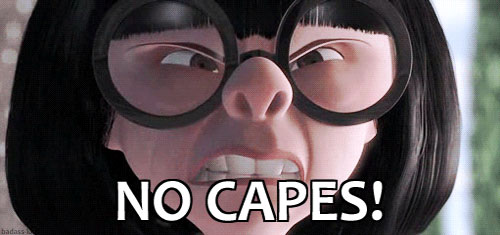
Edna Mode does not approve.

Edna Mode does not approve.


Its hard to talk about a story and the writers since everyone knows it. Of course it is inspired by Bram Stokers novel from 1897. Stoker for his part had heard of the man Dracula and used him as a springboard with next to no research and never having been to Romania himself. This accounts for many of the descriptions of places and things within Transylvania not being remotely like how they’ve been filmed. His novel then was adapted for the stage, officially, by Hamilton Deane and John L. Balderston (Didn’t I mention him recently in the Mummy). Garret Fort has credit for a version of the play script. When it comes to the movie however, this one falls under the movie writer curse: 5 total writers, including the director. There are significant changes from the source material to this of course, no real change there from Hollywood, but the biggest and probably most impactful is the Lugosi look. Dracula was always described as off putting, yet here we have something and someone foreign and handsome.


Real vs Movie Borgo Pass

The Borgo Pass: Erosion the true terror of Dracula

Lugosi was not the first pick. He wasn’t even the second or third. The original choice was Lon Chaney who died, before production began, due to cancer. Called the Man of A Thousand Faces, his roles in Phantom of the Opera and the Hunchback of Notre Dame made him one an easy pick. I don’t know what he would have looked like in the make up, he was one of the rare actors who truly enjoyed the chair and the prosthetics. Lugosi however with his look, powerful and hypnotic eyes, and trade mark accent ended up with the role and the world has never been the same. Sadly the studio did not offer him a contract after the success of Dracula, as they did with Karloff on Frankenstein and he had trouble being seen outside of a certain genre after. Perhaps one of his greatest single work after shows the mans true talent for acting, The Black Cat, in which he starred  against Karloff himself.

The rest of the cast has Helen Chandler as the ever staring Mina, who was fantastic on stage but did not make much of an impact in movies. David Manners, who also appeared in the Mummy and Frankenstein as John Harker here. Edward Van Sloan as Dr. Van Helsing. Seriously all this man plays is the Doctor who knows it all!  Dwight Frye though is the standout. His Renfield defined the role for almost a century to come. It was as problematic for him as it was for Lugosi in the work field after. He shows the widest range of acting in the film with his eyes, vocal pitch, laugh, and mannerisms are truly iconic.

Even the movie magic of the day was amazing. While obviously not a lot of it holds up today, some tricks like Dracula walking through a spider web really do. Today someone would use some half baked CG work and give us something laughable, this wasn’t. This was alien and new and creepy.

TL;DR?

I highly recommend any cinephiles to see this at least once in their life, if they have not already. If you are a fan of all things vampire like I am this is a must have in your collection.

If you want to see where it all began, absolutely watch this.

Modern movie goers will eye roll at the acting and some interesting flubs in the film, but it is a classic and worth watching – at least once


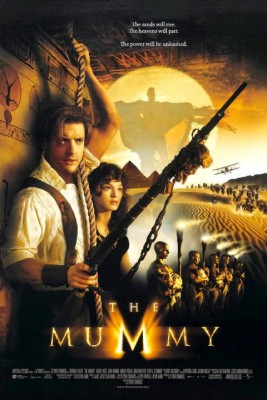
Darke Reviews | The Mummy (1999)

When doing reviews of certain movies that are remakes, I like to do Old vs. New. A true compare and contrast with points for each as to why one is better than the other. I blame Nostalgia Critic for setting me on that kind of track and he should relish the blame. This time, however, I felt that I should do each review separately so I could give proper credit and praise to the founding material which is over 80 years old and be able to highlight all the nods, homages, and little tells I noticed in the remake that show a certain respect or love for the original. In this case The Mummy, that was released in 1999, really feels like a spiritual successor to the original with quite a few callbacks to the source. I praised the original yesterday and in it’s own context and against films of its time it is a fantastic film. The media and medium has evolved over the years that we feel that we need more to our films, better and worse, and that brings us to this remake of The Mummy.

Director Stephen Sommers has an interesting track record when it comes to his films. If I tell you he did the live action Jungle Book with Jason Scott Lee, you might barely remember that. If I tell you he directed and wrote Catch Me If You Can, you will probably think of the Leonardo DiCaprio movie – and sadly be wrong. If I mention Deep Rising (a review coming later this month) you start to get an idea. If I say Van Helsing, your eyes might start rolling. If I say GI Joe: Rise of Cobra – you will start screaming something about the physics of ice in water. The man has a very specific tongue in cheek style when it comes to his films. He doesn’t seem to take anything too seriously, which can be to his detriment, but also seems to have a very specific love for the films he makes even if it appears careless. He is driven by the imagination of a fourteen year old boy and has budgets in the tens of millions of dollars to play with it. Where Zack Snyder has similar issues in addition to a healthy dose of misogyny, Sommers steers clear of it and just keeps the movies fun and the women in them strong and true to their nature. I can tell that Sommers not just liked, but loved the Universal Monsters as a kid. I really imagine him as the leader of the Monster Squad in his neighborhood.

This love probably explains his writing credit as both Screen Story & Screenplay. The other two writing credits, not including the original 1932 credits that are referenced, go to Lloyd Fonvielle ( Cherry 2000) and Kevin Jarre (Tombstone, Glory, Rambo: First Blood Part II). When you look at the film it’s hard to tell where the person who gave us Tombstone (the Kurt Russell version) had a hand in it much less Fonvielle with his limited work. Their powers combined, however, not only captured the essence of the original; but added a world level threat to the epic feel of the movie. Also where the 1932 film focused on the Imhotep/Anck Su Namun (different spelling this time) love story, this one also brings back the sense of adventure that captured the world in the modern age of exploration.  ADVENTURE really should be capitalized as that is the spirit of the film as much as anything else. Your child brain imagines going on these expeditions, discovering lost tombs, buried treasures, and uncovering mysteries of the past in a true swashbuckling manner.

The movie significantly expands the cast of characters as its net of horror and story grew wider as well. We have Brendan Fraser as our Adventurer and treasure seeker Rick O’Connell. Rachel Weisz is our heroine but far from a damsel in distress, as Evie Carnahan. John Hannah (Spartacus) is our Shaggy and Scooby Doo in this mystery as Evie’s brother Jonathan. I’d be willing to bet their last name is a play on Lord Carnarvon, the man who backed Howard Carters expedition in 1922. This time the creature, still named Imhotep, is played by Arnold Vosloo – with only a bit more historical accuracy as to whom Imhotep was. Rather than cast Anck Su Namun as the same actress for both the past life and current, the role went to the Venezuelan beauty Patricia Velasquez. A new character is introduced to the story and an old name changed dramatically in Oded Fehrs Ardeth Bay, who played a guardian of the tomb.  The villains lackey, Beni, was played by frequent Summers character actor Kevin J. O’Connor.

From a technical standpoint the movie is very much a product of its times. The CG isn’t all that hot, but they do some creative things we had not seen before with it. Sadly we’ve seen it too much since then. The film also wisely used a lot of practical effects to help the story along. When it went practical the notes were hit near perfectly for whatever tone they wanted and the effects looked good. The CG for quite a few effects mostly came off comical, and while I hope that was the intent if it wasn’t there’s a huge disconnect. Sadly this level of computer work seems to not evolve through any of Summers later works; which becomes especially problematic when you look at GI Joe ten years after this one.

TL;DR

This movie is not scary. It is fun. It is just plain, ol fashioned, adventuring fun. It has problems true, but also has a lot of heart and humor to it along with some honest tension and a reasonably well crafted story. Brendan Fraser’s natural charisma is probably the biggest key to this, but everyone does their part.

I really do recommend this one if you need a beer and pretzels night with a bunch of friends.

If you really want to treat yourself though? Watch the original and then this one and look for how many lines of dialogue, set pieces, character names, and story elements are kept from one to another. It’s more than you’d guess.


Darke Reviews | The Mummy (1932)

I promised I would spend time this year talking about the Universal Monsters. These are the originals. These are what all else since has been based on, inspired by, or outright copied from. Sure there were a handful of adaptations of some of these works before hand, but these were the ones that caught the public eye and the imagination of an generations. There have been a few false starts and failed reboots in the past twenty years or so of some of these original creature features and rumor has it that Universal is going to try again with these films. The recent remakes have had mixed success with fans, critics, and the box office. So for todays film, lets discuss archaeology a bit, shall we?

Some spoilers below.

Egypt had been awash in mystery and mysticism to the western world for decades when this film came out.  The celebrity status of the ancient culture had gone, well quite frankly, viral ten years prior when Howard Carter had discovered the intact Tomb of Tutankhamun (King Tut). This launched (or relaunched I suppose) the modern era of Egyptology. It really comes as no surprise that after the success of Dracula and Frankenstein in 1931 that Universal would be seeking out another monster to fill their slate. They had to look no further than sensationalist newspapers tales of the Curse of the Pharaohs. I suppose the media blowing things out of proportion isn’t as new as we thought neh? With the ideas of curses on mummies and their tombs and an audience hungry for something to scare them magic was bound to happen.

The story was originally written, though uncredited, by Richard Schayer and Nina Wilcox Putnam. It was adapted to the screenplay by John Balderston, who also wrote the screenplay for Dracula and Frankenstein. Balderston, fascinatingly, was a foreign correspondent who covered Carters opening of the Tomb in 1922.  He also prior to this had written stageplays for both Dracula and Frankenstein. He also adapted the first version of the film Last of the Mohicans. If we thought Hollywood was a factory now, churning out writers and spitting them out, it looks to have been worse in the early days with people going uncredited, underpaid, and in some cases having no rights to their work and being forced to sue.

The film focuses on the recent discovery of an intact mummy, by the name of Imhotep,  found in unusual circumstances. The movie wastes no time before the title character resurrects himself through the greed of a young explorer. Imhotep plans his not so nefarious plot to resurrect his equally dead and mummified love Ankh-es-en-amon. Yes, that is right – this is a love story with the focus on a monster. He isn’t the rotting corpse image we often imagine, but rather a dry and only slightly emaciated individual who actually spends time amongst people and takes on the name Ardeth Bay, in his search for the reincarnation of his lost love. He finds her in a young british socialite named Helen Grosvenor and begins to use his powers to remove those who would stand in the way of his love; while our “heroes” try to save the young woman’s life. It’s fascinating to me how much I find myself siding with the so called monster as I watch this and want him to succeed. What is equally fascinating is that, for its time, it is no act of our protagonists but rather the female center of the film that wins the day.

I think part of the success of the film resides in the reserved yet deeply emotional performance of Boris Karloff. Karloff, a man so awesome all they used was his last name on the poster, was already forty-five when he took this role and had a huge career behind him. He had recently been thrust into the limelight as Frankenstein. The films made the man seem a towering giant against his cast mates, yet he was only 5’11. He had decades of acting experience before him in both stage and silent pictures before. It’s worth mentioning amidst this praise that the rest of the cast does well. The style of film at the time had movies shot as if they were stage plays rather than motion pictures. Blocking, dialogue, even a bit of hollow over acting come from that particular style. Along with Karloff, Edward Van Sloan was a regular in these original films, always playing the same character by type if not by name. In the Mummy he is the wizened Doctor Muller, who understands the powers of The Mummy, his goals, and the fact that “the old gods of egypt still have power here…”

Another special mention goes to director and cinematographer Karl Freund. Sadly uncredited in Dracula for his work, he was given the appropriate credit in the Mummy. His knowledge of the camera was probably some of the best in the world at the time having worked in film since 1914. He was also the cinematographer on the German classic Metropolis. His eye for the technology, light, and even color (its important in black and white…) gave the Mummy its much needed atmosphere.

TL;DR

The Mummy is a classic and if you truly appreciate old Hollywood needs to be part of your collection or at least watched. It will not satisfy modern movie goers a single iota, but if you want to see where we came from. If you want to see what inspired so much in the years to come. Take 73 minutes of your life and give it a watch.

The next review will cover it’s most modern remake and I will touch on all the things they took from this film.


If you do want a copy of this I would have to recommend getting it and all of its ilk here Universal Classic Monsters: The Essential Collection [Blu-ray]


Darke Reviews | Jeepers Creepers (2001)

When I first started writing reviews it was for a dear friend, and respected reviewer Grim D. Reaper over at MovieCrypt. It feels like so much longer ago than thirteen years, but this movie was one of the very first I reviewed. I have a bit of nostalgia for this and *almost* waited to put this on a classics day this month, but I do not think it is quite there yet. I do fondly remember watching this in a theatre alone shortly after my move to Arizona and how I felt coming out of it, which makes this one special to me.

Still riding the early wave of low budget horror that has long since crested and feels more like a tsunami that won’t go away these days, Jeepers Creepers made its debut in one of the worst time slots for any movie, Labor Day weekend. This film closed out the summer and was the start of the September drudge that hits us most every year.  The trailer did it’s job on this one though, giving us a pair of teens who saw something odd and did the stupid thing and looked into it. They hinted at a creature and wisely never quite showed it.

The movie was written and directed by Victor Salva. Prior to this he only had Powder to his credit and after Jeepers Creepers 2 is the only worth noting. I consider this a shame as not only did he manage to create an interesting horror universe we had never previously explored, he also was able to obtain wonderful performances from his actors, have beautiful set design, creature design, and camera work. This is no small thing, there are few writer/director combinations that can do everything so successfully. You usually end up with ego (The Nolan Effect) or brilliance. This one, to me, is brilliant.

The stage is set with two college age siblings returning home, even with the laundry, during a school break. One some road in the middle of rural farm country, that could be anywhere in 60% of the US, they think they see a man drop a body into a well. For reasons only twenty somethings and younger might understand they look into it, only to find not one body but several at the bottom of the shaft. They try to leave before the killer returns only to find out it may be too late for them. The rest of the film is a well paced, tension piece building to the climax – which…well see for yourself.

Our siblings are played by Gina Philips, who really has not escaped the horror genre since, and Justin Long in his first starring role. Long had only previously been seen as Brandon in Galaxy Quest and gone on to pretty much hit every genre known to man in the years since of his career; most recently starring in Kevin Smith’s Tusk. With all due respect to Philips, who played the strong horror female beginning to end in this movie, Long is the emotional heart and soul of the movie. You can see the fact that this boy knows how to properly act in this work as he switches from comical doofy brother to so terrified he cannot even speak. I’ve often said comedic actors make some of the best dramatic actors and Long proves the point when given the right material and in Jeepers Creepers he was. You can see it in his eyes through the performance what he is going through.

The technical side of thing, I have no choice but to focus on the Creeper. Brian Penikas was the creature & make up effects supervisor on this project.  He had been professionally working in the industry for sixteen years prior and this appears to be his first Supervisory role. I have never quite seen something like the Creeper, from mythos – to abilities – to design, end to end it is an original thing.  The production design of Steven Legler, who has equally few credits, works perfectly in conjunction with Penikas.

The biggest problem of the film from any perspective is when the perspective shifts. 95% of the movie we are with our brother and sister. They are the focus and we are with them. Then in Act III there’s a switch and for a few minutes we are taken away from them to focus on the creature. While they don’t shine a spotlight on the creature, keeping most of its mystique, the sudden shift of the film is jarring. I appreciated it as it lended explanation to something I would have wondered about, and Grim was disappointed in it. Years later, I see his point, but stand by mine. It doesn’t bother me all that much and doesn’t take away from the movie for me.

TL;DR

If you need a modern(ish) creature feature – Jeepers Creepers is your film. The effects actually hold up. The story holds. The acting holds. This is surprisingly rare in the horror genre and worth embracing.

I consider Jeepers Creepers a modern cult classic in Horror, that hopefully people come to appreciate in time for all that it does right.

Darke Reviews | Alien (1979)

Some movies have good posters. Some movies have good trailers. Then there are the taglines.

“Just when you thought it was safe to go back in the water…”

“Who ya gonna call?”

“Houston, we have a problem.”

“They’re here”

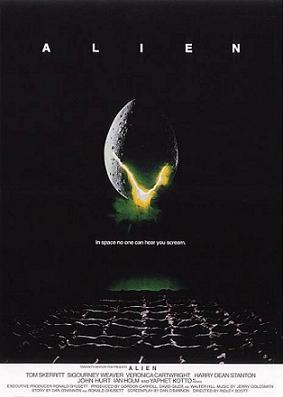
Each of those evoke a memory of a film or a moment in time. They are all you needed to know what you were getting into. Now, imagine if you will (a place beyond sight and sound?), the concept of a horror movie in space is all but unknown. Sci Fi horror and truly gruesome alien monsters don’t exist. You walk into your local cineplex and see the image above with this tagline:

“In space, no one can hear you scream.”

At the bare minimum you might be curious, but what would you be getting if you paid money for a ticket?

The very definition of gothic horror actually.  Written by Dan O’Bannon, inspired by his earlier work Dark Star, and co written by Ronald Shusett. Both of the men would go on to have little success beyond this with Total Recall being one of the few non-Alien based movies of any notoriety.  It’s a shame since they did such a fantastic job in making relatable working class characters that you bother to care about. If that seems a trend in some of my reviews, it is. It is important to me that I care about the characters and create investment in their well being. If I don’t care if they live or die, then where is the tension? There’s no reason to care, then I am only watching for the psychotic glee of witnessing horrific deaths. That has its purpose from time to time, but to be truly great – you need to care. It’s also worth mentioning many of the tropes and cliches of modern cinema started with movies like this. Not only that, but they created a universe here. One we keep dipping our toes back into year after year – Books, Comics, Sequels, Video Games…all of it.

The story here, for those uninitiated, focuses on a group of blue collar miners on a massive space ship and refinery called the Nostromo. They are woken from cryosleep by a mysterious signal from a nearby planet LV-426.  A small recon team is sent to explore the source of the signal and uncovers an ancient ship with secrets within. A specimen is brought back to the ship which begins its return voyage home; only for things to go  wrong. Claustrophobia, fear of an unknown creature, fear of each other, and an ever increasing body count ramp the tension to a climax unlike most others.

The acting cast reads almost as a who’s who of 70’s and 80’s films. Tom Skerritt as Captain Dallas, Sigourney Weaver as Lt. Ellen Ripley (in one of her first screen appearances),  Veronica Cartwright as Lambert, Harry Dean Stanton as Brett, John Hurt as Kane, and Ian Holm as Ash. Every aspect of their characters works. They feel real. Their reactions are honest (in some cases very honest). Special recognition of course must go to Weaver. She has the unenviable task of carrying the film when it initially appears Skerritt – the veteran – would do so. She is outmatched in nearly every capacity by the creature that is stalking them except her will to survive. That is a thing of beauty to watch.

Director Ridley Scott, who has done more famous films than I can list reasonably, made this his opening to Hollywood as a director. He did it remarkably. Every aspect of this after the script came down to his raw direction. Tight claustrophobic tunnels, steam, poor lighting, uneven camera angles, and practical effects all from his hand and eye. Granted all the beautiful atmosphere that makes it the gothic classic that it is wouldn’t do well if the villain was Pennywise.

AlienPennywise

Beep Beep Ripley. Beep Beep


For that we went to the mad genius H.R. Giger. His brain had a thing for the blending of man, machine, and monster. This isn’t to say he made cyborgs or robots, but rather things that seemed to defy both in their surrealist organic nature. Thankfully, he won an Academy Award for this. The creature design is iconic and alone may be the reason this franchise has spawned so many sequels and stories over the decades.

TL;DR

This movie is definitive. It is the work you need to go back to if you want to do horror in space. No one, arguably, has done it better since.

It has some gore to it, but most of the horror comes from what you can’t see and what you aren’t being shown. This movie successfully combines psychological horror, science fiction, and monster movies.

It’s an absolute film.

This is Jessica Darke, with the last review of the night. Signing off.


Darke Reviews | The Devil’s Pass (2014)

So where last year I was doing a vampire movie every other day, this year I think I shall do a classic every other day. As we started the month with a classic horror, let’s jump to something a bit more modern. It is also quite likely something you haven’t heard of or seen yet. Added bonus for me to get to introduce such films. I should mention, I am a supernatural mystery junkie. Ghost Hunters, Fact or Faked, Unsolved Mysteries, etc all were favorites of mine. I have a shelf in my library around such topics. Now a few months before even hearing of this film I came across the Dyatlov Pass incident from 1959. The story of 9 hikers who were found in an unusual state some weeks after vanishing in the Ural Mountains. There are dozens of plausible explanations for it, but I love the idea of mystery.

The Devil’s Pass takes this mystery and applies the found footage genre to it. Made famous (and nigh inescapable) in 1999 by the Blair Witch Project this style of film is designed around the conceit of someone using a camcorder, cellphone, or some other recording to capture every moment of an event or experience. These films also are particularly known for shaky cam due to the nature of the work, which is a turn off for some watchers.  Night vision is also a regular trick of the camera work but is usually far more bearable and tends to add something to the film. The found footage aspect really isn’t wasted and the film utilizes it as one of the tools of storytelling rather than a style. The film was written by an unknown, Vikram West, but directed by a very well known Renny Harlin. Harlin has a strange career and aesthetic to his work, but most people know Die Hard 2, Long Kiss Goodnight, and Cutthroat Island.  This sort of film seems deeply out of the norm for him.

Since this one is definitely newer, I am retaining normal spoiler free territory.

It focuses on a group of college students from the University of Oregon trying to uncover the mystery of what happened in 1959.   The mystery and tension continues to build amongst the group and the environment around them as it bothers to explore some of the psychology of these events.  The actors, while falling to similar stereotypes, don’t really get too annoying.  They are overall rather smart and came with all preparations in mind. The only mistake they make is the one not to leave when things get odd. The individual characters themselves are all relatively interesting and worth watching. They do figure some stuff out on their own that made me smile and showed some awareness usually lax in teen/twenty something films. I believe the interactions between them and watching their own fears become manifest in the performances. Regretfully, I do lose track of who is who a few times as we have a cast of Abercrombie models, but it’s negligible with only a total cast of twenty in the film.

From a technical standpoint the movie has solid practical effects where possible and they sell themselves well. It doesn’t rely on a lot of gimmicks in the effects and lets your imagination do the work. The CG that is used occurs sparingly but is limited by budget and I can tell. The best is the avalanche that had to occur in any mountainy/snowy terrain for a movie like this. Yes, you can blow it off as the sounds it makes coming down, but at the same time they really did a good job of bringing the raw force of nature to life.

TL;DR?

I was really surprised by this film. I found it on a lark one day when I was searching my Netflix. I was reminded of the actual incident and thought I’d give it a once over. It was absolutely worth it. It is a slow burn that builds to a satisfying climax that is worth discussing with whomever you watch it with.

If you have issues with found footage though, give it a pass because the camera work is pretty normal for the genre and could make you nauseous. There is little blood or gore in this one – which I suppose hits some spoiler territory – but also in prep for the film you need to know.

All in all Devil’s Pass is a fun little horror movie and an enjoyable ride. It’s fun to think what if sometimes…


Darke Reviews | A Nightmare on Elm Street (1984)

It seems fitting to start this years October reviews with the film that started it all for me. I channel surfed into it when it was on network TV a couple of years after its release. It is one of the few movies to ever actually scare me. It sticks with me today for more reasons than one. While not the original slasher film, not by a long shot, with Halloween and Friday the 13th beating it by a solid 6 and 4 years respectively. Heck, Halloween had already had two of its sequels out before this was released and Friday the 13th had four. This one stood apart from the rest though. There was something new here. So let’s talk about A Nightmare on Elm Street.

It should be noted, this may not be spoiler free due to the age of the film.

Written and directed by Wes Craven, a name now synonymous with the horror genre, but was at the time relatively unknown. He had some mild success a full decade before with The Last House on the Left and the Hills Have Eyes, but he was aboard the New Line Cinema train to get a new “slasher” out. Where as Michael Myers and Jason Vorhees are “men”, he wanted to create something new. Something scarier and he went into the land of dreams. Sure we all have nightmares, but what do you do when you can’t wake up from it? When the Nightmare follows you? How do you fight something like that? This added a new level of fear to the teen slasher and it was unlike much we had seen before.

The script uses similar tropes from other slashers of its ilk, which were relatively new at the time. You have your imperiled teens, quaint suburbian life, a brief bit of recklessness from the teens, and a relentless killer after them who is seemingly unstoppable. What makes our killer here different was motive. Jason was about revenge on the “type” of teenager. The people who let him die and the stereotype that exists all the way into todays films some thirty years later. Michael was driven by something else, something broken in him but at the time was purely human. His type was similar to Jason overall though, with anyone getting in his way just as much a likely victim as well.

Then we had Freddy. Freddy went after the kids not because of anything they did, planned to do, might have done, or didn’t do; but instead he went after them for the sins of the fathers and mothers. This makes him an entirely different kind of monster. He tortures the children in order to make the parents suffer for their crimes of killing him. The original film doesn’t entirely address whether or not he actually committed the crimes he was accused of and that the mob burned him for. It hints at it with the opening credits that he was in fact guilty of something, but that ambiguousness adds to the horror that is Freddy Krueger.  It’s never explained how he does what he does either, it just is (again original only), leaving that supernatural mystery to make him even more terrifying still.

All of this wouldn’t work without the right people though. Heather Langenkamp owns this film as Nancy Thompson, as much as Robert Englund does as Freddy. Her evolution from a scared teen, to understanding what hunts her, to trying to become the hunter is a classic to watch and sold for every single moment she is on screen – which by the way is most of the running time.  Englund gives the definitive performance of what it means to chew scenery in this as he cuts his way through the cast. The supporting cast is equally as important here for their own parts, with the esteemed John Saxon as Lt. Donald Thompson, Nancy’s father, and Ronee Blakley as Marge Thompson her mother. It’s one of the earliest times, to my recollection, we dealt with a couple who had divorced in a horror film with their child literally caught in the middle of it. The reasons for the divorce, the tension between them, and even how they deal with their own guilt through the film is as telling as any lines of dialogue. When discussing the supporting cast, its impossible to not mention a certain young mans first role – Johnny Depp as Glenn, Nancy’s disbelieving but big hearted boyfriend.

From a practical and movie making standpoint, while the effects don’t always hold up. The make up varies from scene to scene if you look too close; but this is an acknowledged mistake by the filmmakers. The music follows Cravens usual style of simplistic piano/keyboard with a guitar. It doesn’t sound elegant, but man does it work. It, much like the Jokers Theme from Dark Knight, is so offputting and uncomfortable it makes you squirm a bit. The lighting and practical effects help sell the movie and make it work. CG could only damage it and the weakest sequence is the one with some CG in it. One of the best and most iconic is Freddy pushing through the wall over a sleeping Nancy. For the record though, the one that got me was Tina’s death in the beginning.

TL;DR

If you have not seen A Nightmare on Elm Street and love horror movies, you must see this. It is one of the triumvirate of slashers and arguably the best.

While it may not be scary to individuals now, this one will always hold a special place in my heart and my nightmares. It is probably one of, if not the, most influential film of my childhood.

If you want to know more about the Nightmare saga, I recommend Never Sleep Again: The Elm Street Legacy. It’s on Netflix and runs 3 hours and I enjoyed every minute of it.

Darke Reviews | As Above, So Below (2014)

There isn’t a lot that scares me when it comes to putting my own life in danger. I think I’d try anything  (relatively) reasonable if I thought it would be fun. Among those hobbies Urban Exploring. In many cases it is breaking and entering/trespassing – yet not always. I *love* the idea of exploring these old abandoned places. Finding history, truth, and perhaps a bit of mystery in them. So when I saw a movie about a group of individuals urban exploring a part of the Paris catacombs I knew I had to see it.

It’s also worth mentioning that of the jobs that exist out there if I couldn’t be a successful writer or what I am doing now didn’t pan out – my dream job is archaeologist. Much for the same reasons of the Urban Exploring. I love history, mythology, ancient cultures, and finding that which was lost or forgotten. So when the movie starts and there’s an archaeology element to it I am now even more interested.

How does it pan out?

This may be director John Erick Dowdle’s best original film. Along with his brother Drew, who co wrote the movie, I think they hit something new. Their earlier work together is Quarantine; which is just a lackluster translation of the superior spanish film REC. John alone directed the abysmal “Devil” (2010). They elevated some of the previous work , but are showing definite trends, which leads me to the technicals first.

I wish I could have watched the film. I had to keep my eyes closed half of it due to motion sickness from the hand held camera work. That is unusual for me, but it is a problem for some members of the audience who would want to see this. Odd camera angles as well as a preference for handheld cameras are showing in the history of his work and finally – it’s to his benefit. When I could watch the film the camera shots were well framed and added to the tension and emotion appropriately.

This being a horror film in the 21st century I have no anticipation that anyone will live, so I am kept on the edge of my seat wondering. Another technical that works really, really well is the fact with only a few exceptions the movie was filmed in the catacombs, even the piano from the trailer was filmed down there. You can’t fake good atmosphere and it shows in this movie. It was a good decision and I am happy that they made it. The dangers for the location scouting alone were real and it adds to the film to realize so much of it is not a set and that the lights in the shots are the ones on the head cams.

The acting was spot on with only a handful of logical fallacies and failures throughout. Ones that almost have to exist to be a successful horror film. Perdita Weeks does well as the driving force and catalyst for the events. Ben Feldman (Cloverfield, Friday the 13th) sadly has a character I just want to smack, but does as well with it as the trope he is playing allows for. François Civil’s Papillion is probably one of the most enjoyable to watch – and the most honest in his reactions.

I think what the movie does best is that, from a story perspective, it openly acknowledges the supernatural. People don’t spend (waste) time denying it exists when blatantly confronted. They react with horror yes, but within the confines of the narrative accept it in all its dark glory. This to me is a pleasant change of pace, especially when tied to an area of study I enjoy.

TL;DR?

Well this review should have gone up last night, but I was left so nauseous that I couldn’t finish. Overall the film is good and for horror fans worth seeing. The audience I was with genuinely seemed to enjoy it.

I just have trouble recommending it due to the camera work.

If you don’t ever risk the sensation of nausea from shaky cam work in excess *and* enjoy horror, absolutely go see it.

If there’s a risk, sorry, just not worth it. Sad that as the attention to detail by using the real catacombs was such a brilliant choice.